
The Prepare and Explore phase of SAP S/4HANA Public Cloud.
Switching to a new ERP system is a radical step for any organization. Especially when you operate internationally, work with different business processes and the daily operations have to continue as usual. For Chrysal International, the implementation of SAP S/4HANA Public Cloud is therefore more than a technical change. It is a step towards more standardization, better collaboration and a scalable basis for further growth.
In this first blog, Hans Jansen, project manager at Quinso, takes you through the first phases of the project: Prepare and Explore. Two phases in which the foundation is laid for everything that comes next.

About Chrysal
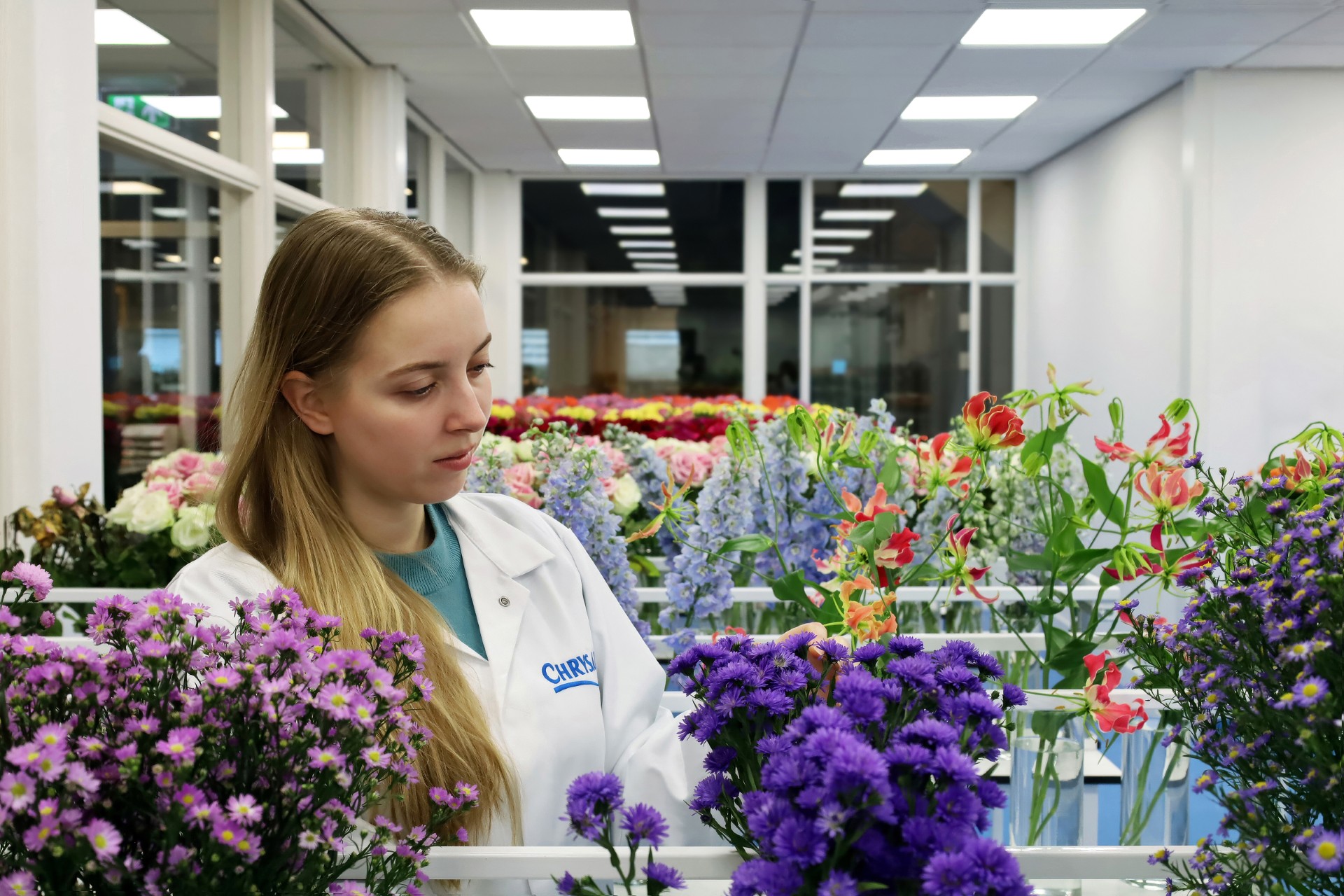
Chrysal operates worldwide in the flower and plant industry, helping growers, wholesalers, retailers and consumers keep flowers and plants beautiful and fresh for longer.
As such, Chrysal plays an important role in a chain in which quality, shelf life and sustainability are becoming increasingly important. That international position requires processes that are reliable, scalable and easily manageable. That’s exactly where SAP S/4HANA Public Cloud comes in.
Prepare phase: laying down the project foundation
A successful ERP implementation starts not with technology, but with clarity. This is why Quinso, together with Chrysal, started setting up the project structure in the Prepare phase. In this phase, roles, responsibilities and consultation structures were defined. How decisions are made was also discussed.
“A good start is really half the battle in a project like this,” Hans Jansen says. “Before you go in depth with processes, you have to make sure everyone knows what the goal is, who has what role and how we work together.”
Chrysal also prepared a Business Process Master List, or BPML for short, during this phase. This defines the business processes that are active within the organization.
Within Quinso, the project team was also prepared. The customer case was reviewed internally, the scope was discussed and a streamlead was assigned for each process area. Think of sales, finance, warehouse management, purchasing, production, master data, interfaces and reporting.
Starting together with confidence
The Prepare phase concluded with a joint kick-off. This included project members from Chrysal and Quinso, as well as members of the management team.
Equally important: the teams got to know each other beyond the content. After the formal part, there was joint bowling and dinner. An ERP project demands a lot from people and it helps if there is trust from the beginning.
“You notice that such an informal start does something to the team spirit,” says Hans. “People know how to find each other faster after that.”
Explore phase: testing processes against the standard
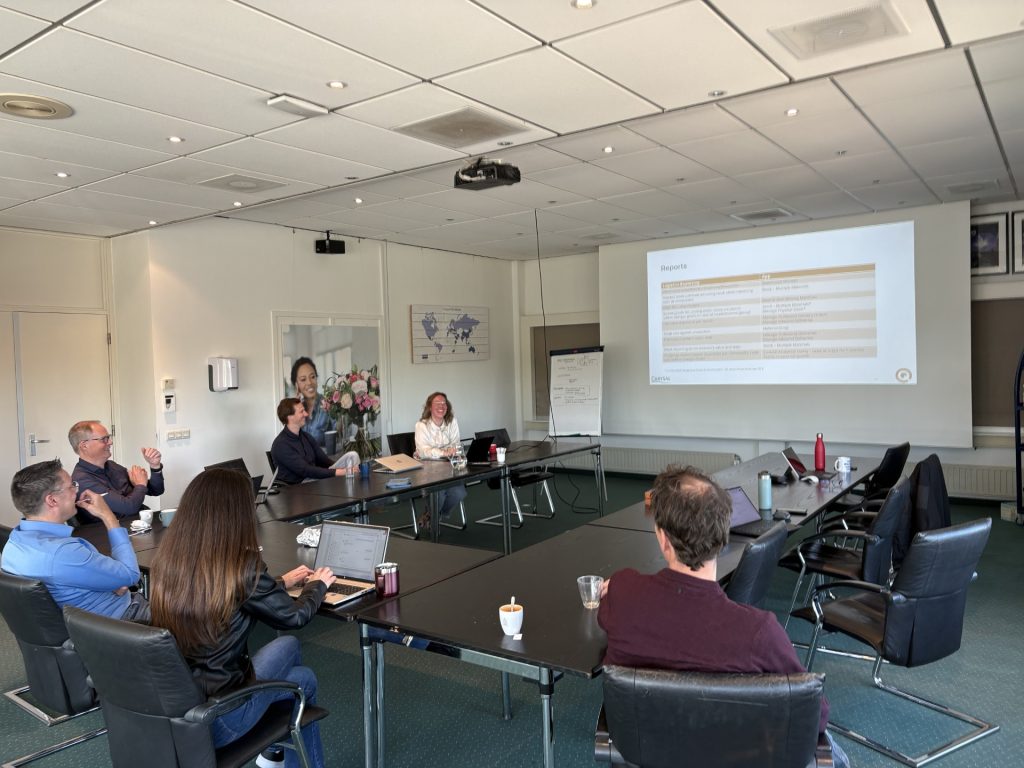
After preparation, the Explore phase began in February 2026. In this phase, Quinso’s consultants walk through the business processes together with Chrysal’s super-users. The goal: to determine how Chrysal’s processes align with the standard processes of SAP S/4HANA Public Cloud.
Fit-to-standard means that SAP’s standard processes are the starting point. Not: how do we fit the system to everything we do today? But: how do we make our processes align as much as possible with proven best practices?
This sounds logical, but in practice this is often an exciting part of an ERP project. Organizations are used to their existing way of working. As soon as a standard process runs differently, the tendency to make exceptions quickly arises. At Chrysal, we noticed just the opposite.
“I really recognize that fit-to-standard mindset there,” says Hans. “At the front, almost every organization says: we want to work standard. But the moment people see the standard and notice that it deviates from their current way of working, it often becomes difficult. At Chrysal, however, they stick very clearly to the starting point: first the standard, then look at what really needs to be different.”
This attitude makes the Explore phase concrete and purposeful. Exceptions are made not because something has always gone that way, but because there is a clear business reason for it.
Keeping focus on what is needed
In addition to fit-to-standard, we work from the idea of a Minimum Viable Product. This means that in the first delivery, mainly the essential functionalities are included. Nice-to-haves are deliberately parked.
A great example came back during a report-out presentation. One of the super-users indicated that certain topics were interesting, but not necessary for the first go live. The conclusion was clear: go live with the standard first, then optimize further.

An ERP project does not become more successful by including everything at once. It is precisely by consciously choosing what is needed now and what can be done later that the project remains manageable.
Dedicated super-users as a success factor
What makes this project special is the composition of the team on the Chrysal side. Whereas key-users at many organizations combine their project role with their daily work, Chrysal opted for a dedicated project team of super-users.
That makes a big difference. The super-users have time to prepare workshops, figure out questions, make decisions and interact quickly with Quinso’s consultants. This creates pace in the project.
“The super-user team’s short lines of communication, availability and, above all, decision-making power are to me a textbook example of how an Explore phase should go,” says Jurgen de Jong, streamlead interfaces at Quinso.
This availability is not a luxury, but a prerequisite. If questions remain unanswered or decisions are put off, the whole project slows down.
Extra attention to interfaces and the change
An important part of this Explore phase is the focus on interfaces. Chrysal, like many international organizations, does not work with one stand-alone system. SAP S/4HANA Public Cloud will soon have to work together with other applications and data sources.
This is why Quinso invests extra time in mapping out links in this phase. Not only during the realization phase, but right at the front end. Which systems are involved? What data goes back and forth? At what point are links called upon? And what does this mean for the setup, planning and budget?
“We want to know 95% at the end of the Explore phase: this is what it’s going to be,” says Hans. “Not only in terms of content, but also in terms of effort and budget. You want to avoid being surprised late in the realization phase by interfaces that turn out to be more complex than expected.”
Change as an integral part of the project
In addition to technology, change also gets a lot of attention. After all, a new ERP system affects not only processes and systems, but also roles, responsibilities and daily routines. Especially with an implementation of SAP S/4HANA Public Cloud, where standard processes are the starting point, often more than just the software changes.
This is why change management is an integral part of the Quinso Activate approach. During the Explore workshops, we not only examine whether a process technically fits within SAP, but also what this means for the organization. Which working methods will change? Which departments will be affected? Where do new responsibilities arise? And where will additional explanation, guidance or training be needed?
Those insights are captured in a Change Management Impact Analysis. This analysis forms the basis for the change impact plan in the following phases. In this way, change does not become a separate communication track alongside the project, but an integral part of the implementation.
For Chrysal, this is especially important because the project touches several countries. In this phase, the Netherlands, France, England and Kenya are included in the inventory. This requires a good balance between standardization and daily practice in the different organizations.
Report-out: presenting together what has been discovered together
At the end of the Explore phase, Chrysal’s super-users and Quinso’s consultants jointly present their findings to the project management team. For each stream, they explain how the cooperation went, which SAP best practices are deployed, where there are risks and what is needed for the first delivery.
“It was nice to see that the report-out presentations were truly a collaborative result of both super-users and Quinso consultants,” says Chrysal’s Dennis Hanibals.
Based on these report-outs, the final scope is determined. This creates a clear starting point for the next phase: realization.

On to the next phase
After Prepare and Explore comes the realization phase. In this phase, SAP S/4HANA Public Cloud is set up based on the choices made. This is followed by the test phases, in which Chrysal and Quinso test whether processes, links and user experience fit with practice.
The foundation has been laid: the governance is in place, the teams know each other, the scope has been determined and the standard has been consciously embraced. With that, Chrysal is ready for the next step.
Curious about your next step?
Want to know how your organization can make a smart move to SAP S/4HANA Public Cloud? Or are you curious which processes within your organization align with SAP best practices? Contact us! We are always happy to assist you.